perpetual calendar – Holiday Edition
Reading the functions
Date
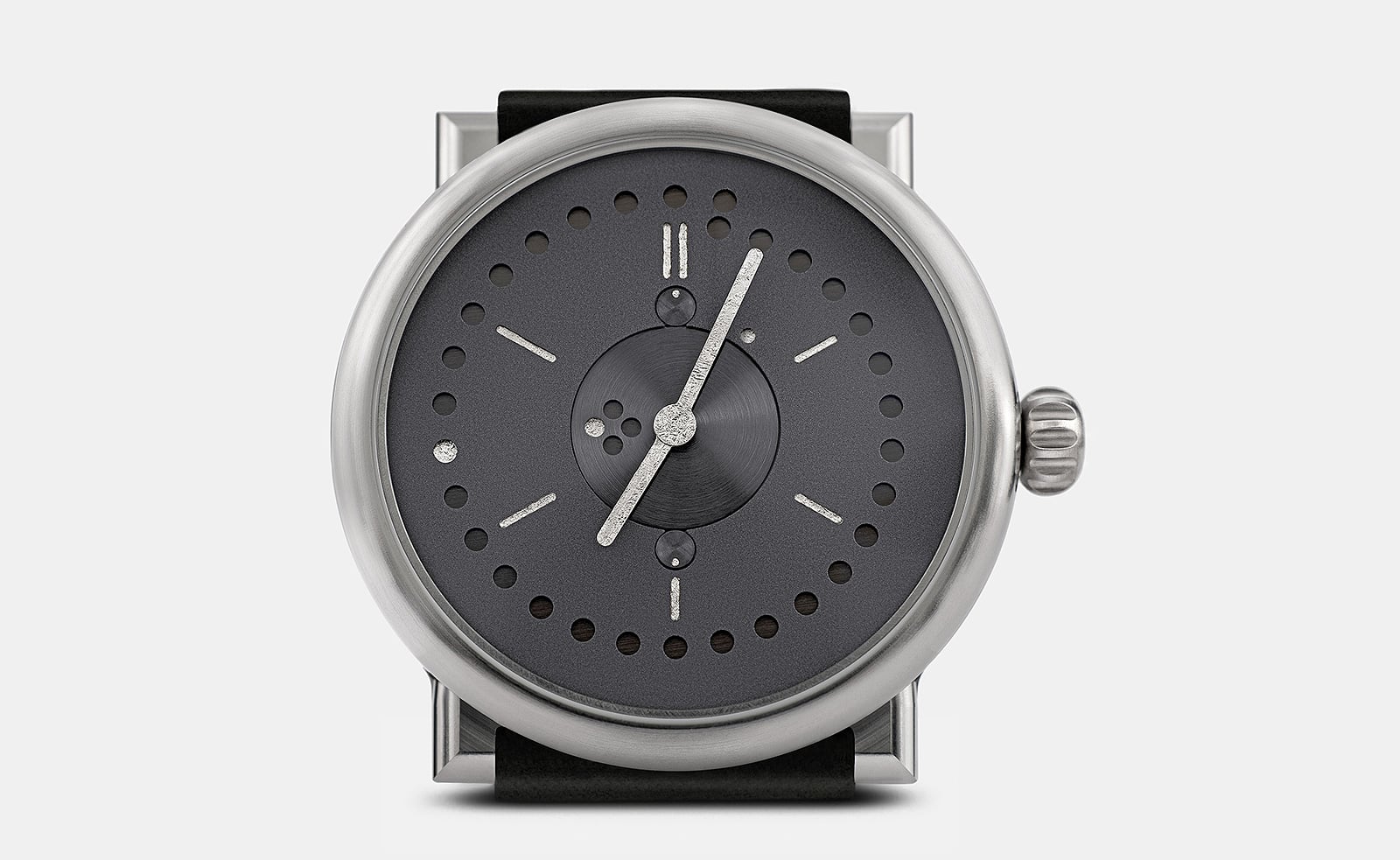
The 30+1 holes around the perimeter of the dial display the date. The 10 minute markers serve as reference points. For example: the marker indicating 30 minutes also shows the 15th day of the month (30÷2=15). These 5 day markers allow for the date to be read at a glance and after a short time, you can recognize the date intuitively.
Month
The 4 perforations in the month disk indicate the month. When the outermost perforation points to 1 o’clock, it is January. When the outermost perforation points to 2 o’clock, it is February. The month disk rotates clockwise.
Leap year
The 4 perforations in the month disk also show whether it is a leap year or a common year. When the outermost dot is orange, it is a leap year (366 days). When it is dark, it is a common year (365 days). The leap year disk rotates clockwise beneath the month disk.
Power reserve
The small circle beneath 12 o’clock is the power reserve indicator. Full power (60 hours) is when the dot is beneath the rightmost 12 o’clock marker. Empty is when the dot is beneath the leftmost 12 o’clock marker. The disk rotates counterclockwise.
Hour and minute
The exact minute can be read using the date holes, which are spaced at 2 minute intervals. Holes mark even minutes and gaps odd minutes.
Second
Just above the 6 o’clock marker is a seconds disk with a milled excentric dot. This rotating disk indicates that the watch is running.
Control dot
The control dot is located between 1 and 2 o’clock. Together with the time, the control dot shows when it is okay to adjust the date. The video on the manual page shows how this works.
Mechanics
How is Ludwig Oechslin’s perpetual calendar function unique?

Oechslin executes his perpetual calendar as a gear system comprising 9 additional parts and 3 modified parts (*).
- Dial*
- Month disk
- Date disk*
- Baseplate for perpetual calendar mechanism
- Date ratchet wheel
- Bridge
- 4 year ratchet wheel
- Another bridge
- In-between wheel
- 12-hour ratchet wheel*
- Month ratchet wheel
- Additional tooth
Each part is designed to solve multiple problems at once. Like in software engineering and architecture, a simpler solution is more difficult to achieve, but technical elegance brings significant benefits. If a solution requires fewer parts, there are fewer interactions between parts, and fewer potential sources of manufacturing error. Oechslin strives to develop the simplest possible solution because he wants a more reliable result – and he enjoys the intellectual challenge. His ability to reduce a perpetual calendar down to 9 additional parts is the only way ochs und junior, a company with 4 employees, could bring to market an original perpetual calendar function. Oechslin replaces the R&D and quality assurance departments with greater upfront thinking.
What was Oechslin’s motivation for using gears?
With their turning wheels, gears lend themselves to Oechslin’s goal of displaying the date, month and year in analog fashion, like the hands on a watch. The calendar information on Oechslin’s perpetual calendar is readable from the same distance as the time. Gears also allow Oechslin to invent solutions which use fewer parts. Fewer parts leads to higher reliability – and easier servicing. It’s why ochs und junior can offer a lifetime guarantee on the parts designed by Oechslin. Finally, his gear system enables all of the functions to be adjusted quickly via the crown; there is therefore no need for additional pushers like in conventional perpetual calendars. It is fun to set! Check out the “Forwards and backwards” video.
What is the base movement?
The Ulysse Nardin UN-118.
Who is Ludwig Oechslin?
The ochs und junior perpetual calendar is the result of Ludwig Oechslin’s 40 year watchmaking career, during which he has continually returned to the challenge of displaying and implementing calendar watches. In the 1990s, Oechslin invented the first perpetual calendar watch with a date adjustable in both directions, the Ulysse Nardin Perpetual GMT.
Overview
A perpetual calendar watch accounts for leap years and displays the correct date until the year 2100. Conventional perpetual calendar functions are executed in levers and springs, are delicate to handle, and comprise many parts (Patek Philippe uses 182). The date is usually only adjustable in one direction via pushers on the sides of the case.
Ludwig Oechslin
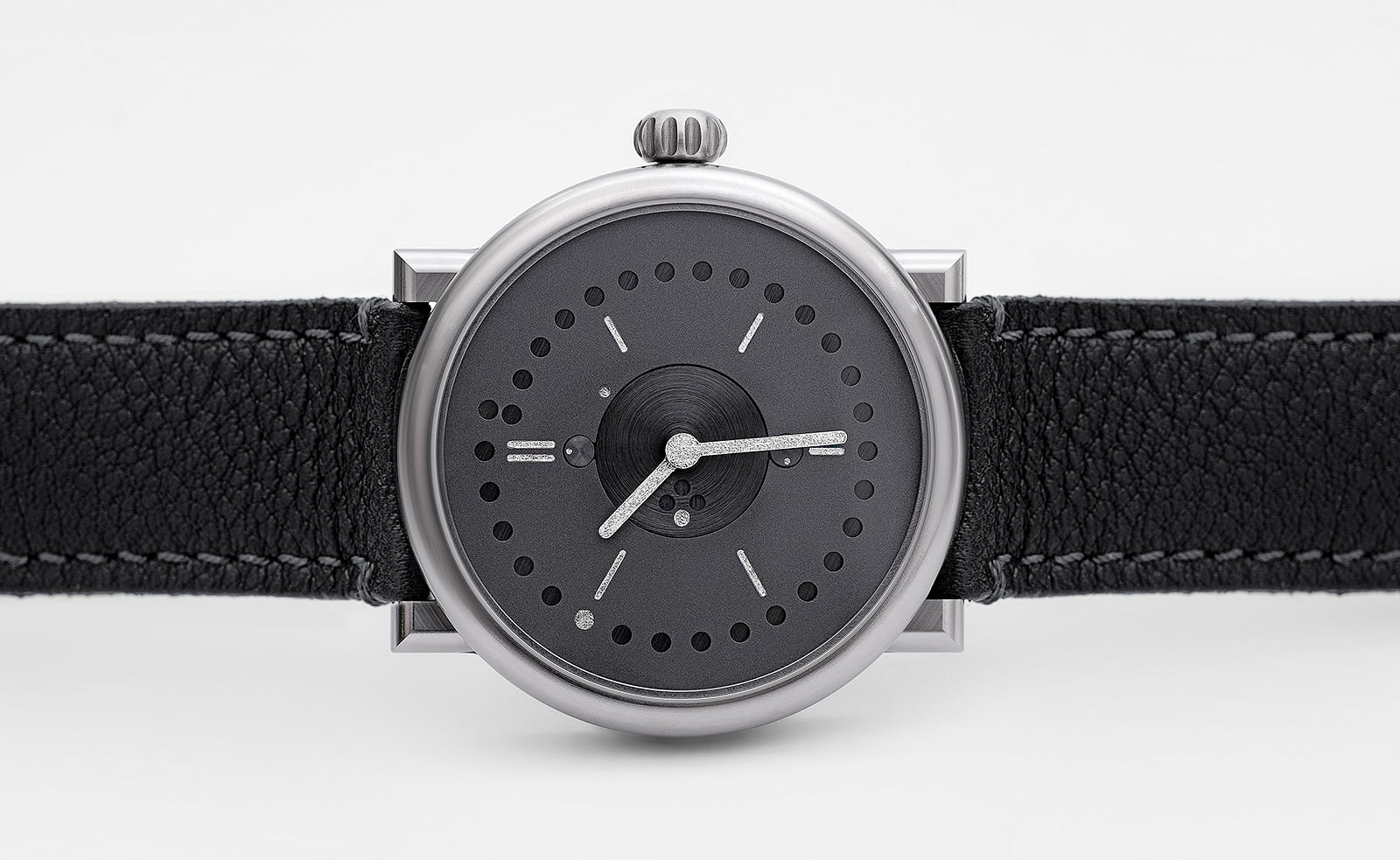
Ludwig Oechslin’s perpetual calendar watch is designed to be practical – from its unique date display to the simplicity with which it can be set. As he explains in this video, the date is displayed with analog dots so that it can be read from farther away than with numerical indications, and to keep the time the first information in the watch’s visual hierarchy. Oechslin’s perpetual calendar function is executed in just 9 additional parts, because fewer parts mean fewer interactions between parts and higher reliability. The date is adjustable both forwards and backwards, and every function can be set simply using the crown.
Further information
Dimension
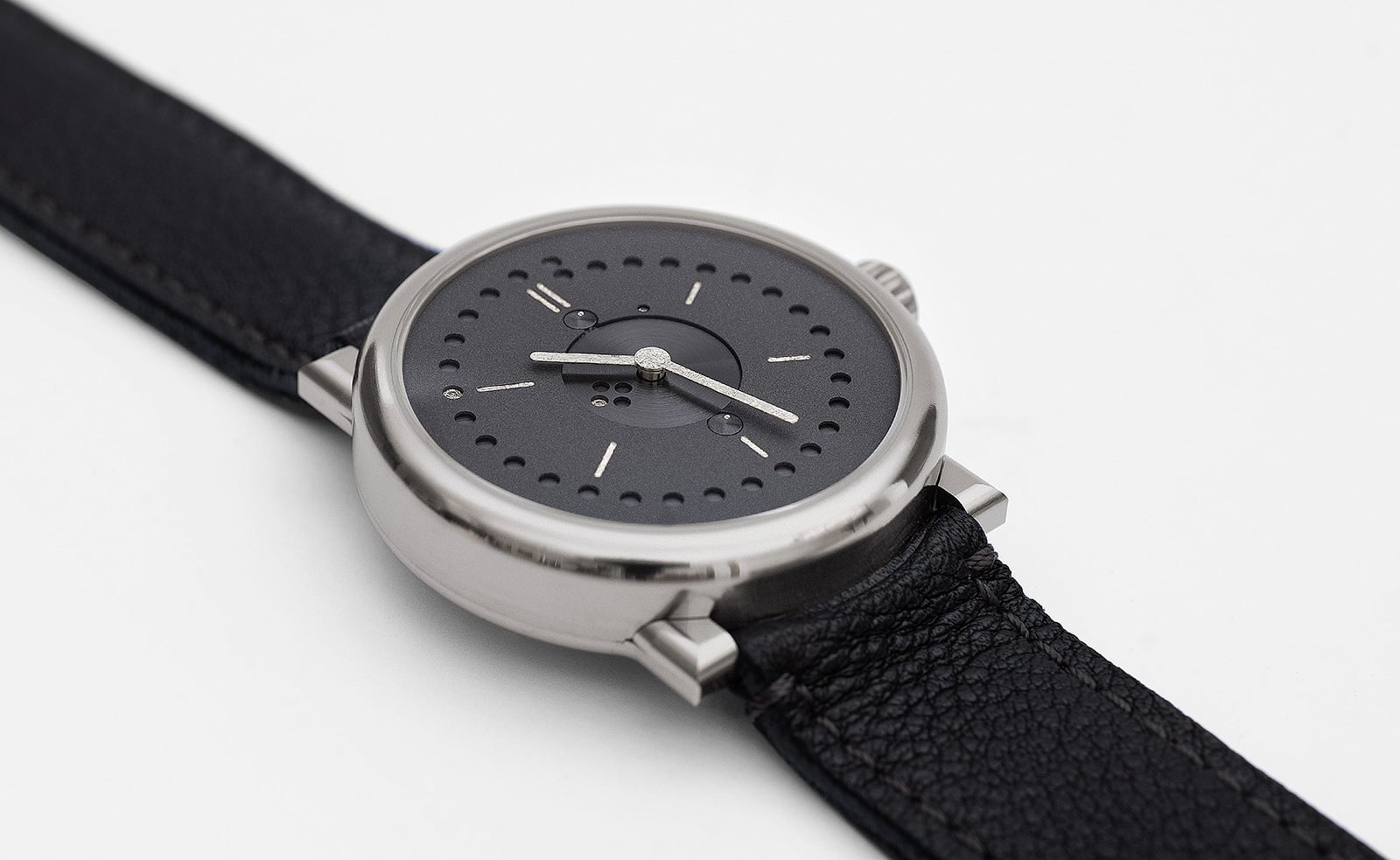
42mm
Weight
62g (without strap and buckle).
Water resistance
100m.
Case
2-part case designed by Ludwig Oechslin.
Base movement
Ulysse Nardin UN-118 with 50 jewels and 60 hours power reserve. Manufacturer: Ulysse Nardin SA, Le Locle / Switzerland.
Crown
Screw-down crown designed by Ludwig Oechslin in grade 5 titanium.
Buckle
Designed by Ludwig Oechslin for 22mm watch straps with no loops.
Crystal
Sapphire crystal.
Swiss made
The ochs und junior perpetual calendar is entirely manufactured in Switzerland. The Ulysse Nardin UN-118 base movement is manufactured in Le Locle. Each watch is hand-assembled and regulated at the ochs und junior workshop in La Chaux-de-Fonds.
Warranty
The entire watch is covered by a 2-year guarantee.
Design
Ludwig Oechslin and ochs und junior, La Chaux-de-Fonds, non-customizable.
Order
Order via Mail [email protected] or via our homepage (shop).
Order with a 50% prepayment in accordance with the ochs und junior standard guidelines: Payment via stripe (homepage), via credit card (saferpay-link on demand), or via bank transfer to our bank account:
UBS Switzerland AG, Case postale, CH – 1003 Lausanne
ochs und junior AG
Rue Numa-Droz 143
CH – 2300 La Chaux-de-Fonds
IBAN CH11 0021 5215 3066 1201 L
BIC UBSWCHZH80A